Screen Eyes: The Complete Guide to Saving Your Vision From Your Devices
Count your screen hours honestly — work laptop, phone, evening streaming — and most women land at eight to twelve daily: a visual workload no generation of eyes ever carried before. The result has a clinical name (digital eye strain) and a familiar symptom list: end-of-day burning, blur, headaches, and eyes that feel like they spent the day in a wind tunnel. The good news: most of it is mechanical and fixable — blink physics, focus fatigue and setup geometry, not permanent damage. Here is the complete relief protocol. (Persistent vision changes belong with an eye doctor — and everyone deserves a real exam every couple of years anyway.)

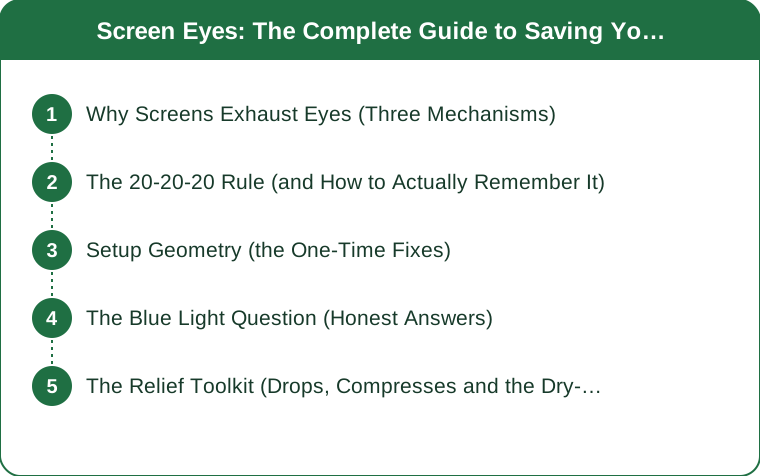
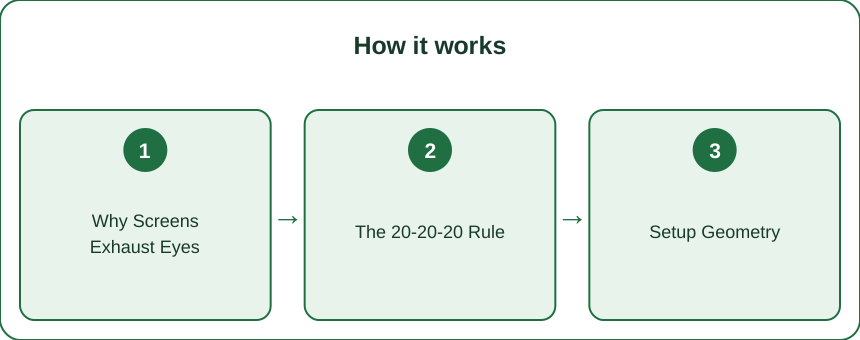
Why Screens Exhaust Eyes (Three Mechanisms)
The diagnosis in three parts: the blink collapse — normal blinking runs 15–20 per minute, screen concentration cuts it by half or more, and partial blinks fail to respread the tear film: hence the burning dryness (the single biggest factor, and the most fixable), focus lock — eyes evolved for varied distances but screens hold focusing muscles contracted at one near range for hours (the ciliary muscle cramp behind end-of-day blur when you look up and the world takes a second to sharpen), and setup geometry — screens too high force wider-open eyes (faster tear evaporation), too close forces harder focus, and glare adds squint. Note what is absent from the list: rays damaging your eyes. Strain is muscular and surface-level — miserable, meaningful and mechanically solvable.
The 20-20-20 Rule (and How to Actually Remember It)
The cornerstone habit: every 20 minutes, look at something 20-plus feet away for 20 seconds — releasing the focus lock before it compounds (the ophthalmology consensus recommendation, trivial to understand and universally forgotten by minute 40). The memory infrastructure: anchor breaks to existing rhythms (every email send, every meeting end, every episode credit roll — attached beats scheduled), use a timer or break app if your work allows, and upgrade the break when possible: stand, look out an actual window (distance plus daylight — double duty), and add ten deliberate full blinks (squeeze gently shut, open — the tear-film reset button). Twenty seconds, three times an hour, and the 5pm eye-burn quietly fails to arrive. The math is absurdly favorable.
Setup Geometry (the One-Time Fixes)
The ergonomics of vision: screen top at-or-slightly-below eye level and 20–28 inches away (an arm’s length — closer is the phone’s crime, covered below), the slight downward gaze this creates lets eyelids cover more eye (slower tear evaporation — the geometry-dryness link nobody explains), kill the glare (screens perpendicular to windows, not facing or backing them; matte screen protectors for stubborn setups), match screen brightness to room brightness (a monitor glowing like a portal in a dim room is a squint factory — and evening device dark modes are comfort wins regardless of the blue-light debate), and bump text size up one notch as free strain reduction (squinting at 9-point font is a choice). Phone-specific: the sub-12-inch doom-scroll distance is the hardest focus work eyes do all day — hold it farther, and give phones the same 20-20-20 courtesy.
The Blue Light Question (Honest Answers)
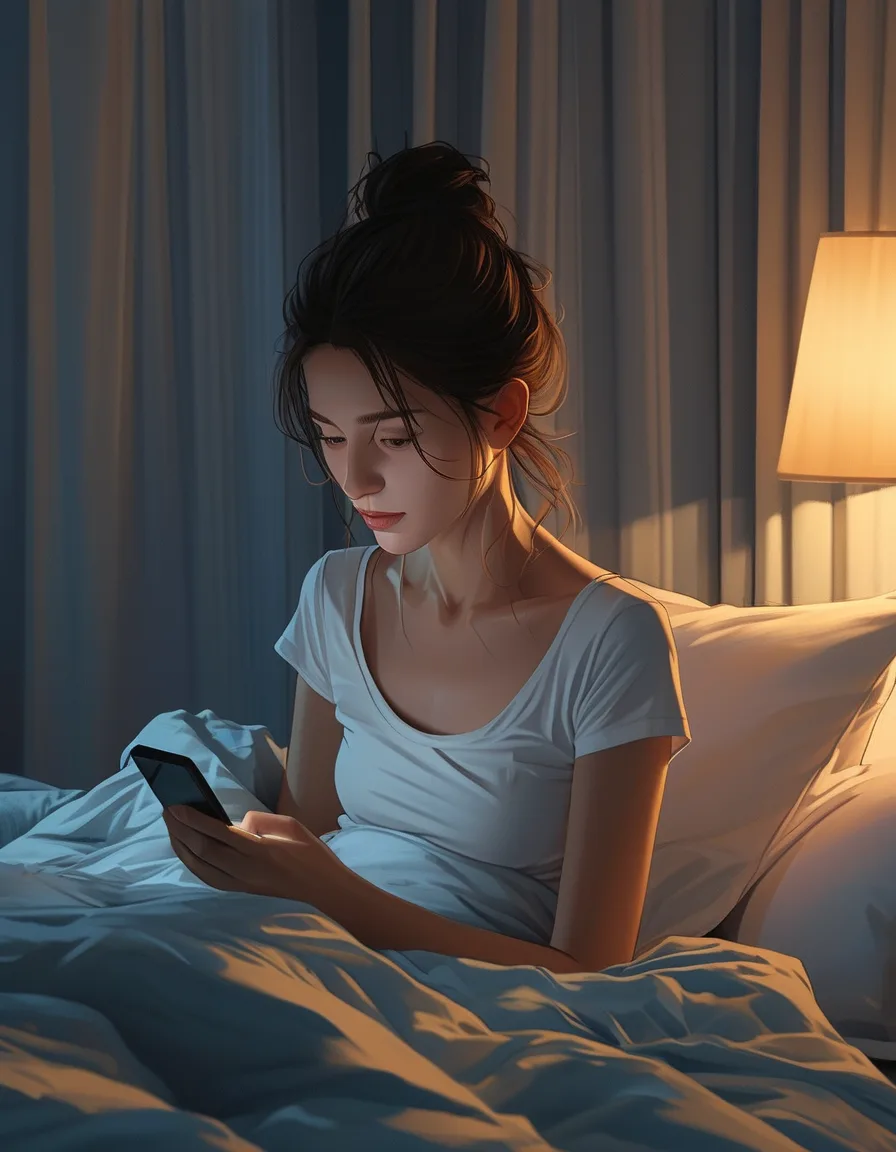
The topic the glasses industry would prefer stayed murky: current evidence does not support blue light as an eye-damage or primary eye-strain cause — reviews and ophthalmology bodies keep landing there, and blue-blocking glasses show little strain benefit in controlled trials (the strain relief people feel from special glasses is usually the breaks and awareness that came bundled with caring). Where blue light genuinely matters: circadian rhythm — evening screen light (blue-heavy but really all bright light) delays melatonin, making night modes, dimming and the final phone-free hour legitimate sleep hygiene rather than eye protection. Verdict: spend on breaks, setup, drops and real eye exams before $90 amber lenses — and treat evening dimming as a sleep habit that happens to involve eyes.
The Relief Toolkit (Drops, Compresses and the Dry-Eye Escalation)
For eyes already complaining: preservative-free artificial tears used proactively (before the burn, not after — twice daily during heavy screen seasons; the redness-remover vasoconstrictor drops are a different, rebound-prone product — skip them), warm compresses in the evening (five minutes — melts the oil glands’ contribution back into the tear film; the spa move that is actually medicine), conscious blink training (the ten-full-blinks reset each break), humidity help in dry offices and AC seasons, and omega-3s carrying modest dry-eye evidence for the committed. The escalation line: strain that persists despite the protocol, frequent headaches, or any vision change means an optometrist — often the finding is mundane and liberating: an outdated prescription doing daily damage, or undiagnosed astigmatism moonlighting as screen fatigue. The exam every one-to-two years is the floor. Eyes are the only pair issued.
Screen eyes, rescued: 20-20-20 anchored to real rhythms, geometry fixed once (arm’s length, slight downward gaze, glare killed), blinks restored deliberately, preservative-free drops before the burn, evening dimming for sleep rather than mythology, and a real eye exam on the calendar. Ten screen hours a day may be the era’s default — the burning eyes were never mandatory. Look out a window for twenty seconds. Starting now, ideally.
Keep Reading
This article is for general informational purposes only and is not medical advice. Always consult a qualified health professional for guidance specific to you.