Setting Screen-Time Boundaries That Actually Stick (for Grown-Ups, Not Just Kids)
We worry about kids’ screen time while scrolling for hours ourselves — and adult screen boundaries are just as important, and just as hard to hold. The screen-break guide: why adults need boundaries too, the ones that actually work and how to make them stick.

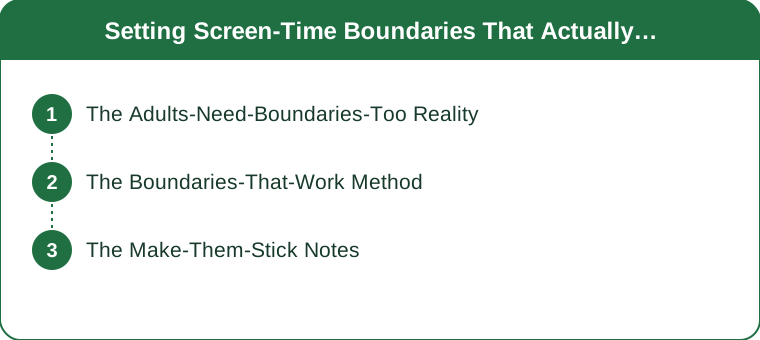
The Adults-Need-Boundaries-Too Reality
Why adult screen boundaries matter: the we-scroll-as-much-as-kids (the adults over-scrolling too from the digital-declutter chapter — the the-scrolling; the we-do-it-too), the the-effects-on-sleep-and-focus (the excess-screens hurting sleep-and-focus from the eye-strain-screen chapter — the the-effects; the sleep-and-focus-suffer), the the-eye-strain (the screen-time straining eyes from the eye-strain-screen chapter — the the-eyes; the eye-strain), the boundaries-are-hard-to-hold (the screen-boundaries being hard-to-maintain from the digital-declutter chapter — the the-difficulty; the hard-to-hold), and the reframe (the adult-screen-time as needing-boundaries-too, worth-holding despite-the-difficulty).

The Boundaries-That-Work Method
The screen boundaries that actually work: the the-phone-free-times (the phone-free times (meals, mornings, before-bed) from the digital-declutter chapter — the the-phone-free; the phone-free-zones), the the-night-mode-and-no-screens-before-bed (the no-screens-before-bed for sleep from the night-mode-sleep-truth chapter — the the-bedtime; the no-screens-before-bed), the the-app-limits-and-friction (the app-limits and removing friction-reducers from the digital-declutter chapter — the the-limits; the app-limits), the the-20-20-20-for-eyes (the the-20-20-20 rule for eye-breaks from the 20-20-20-rule chapter — the the-eye-breaks; the eye-breaks), the the-notification-management (the reducing notifications from the digital-declutter chapter — the the-notifications; the fewer-pings), the the-phone-free-spaces (the phone-free rooms/spaces from the digital-declutter chapter — the the-spaces; the phone-free-spaces), the the-scheduled-screen-time (the intentional, scheduled screen-use from the digital-declutter chapter — the the-scheduled; the intentional-use), and the the-replace-with-alternatives (the replacing scrolling with alternatives from the digital-declutter chapter — the the-alternatives; the swap-it).
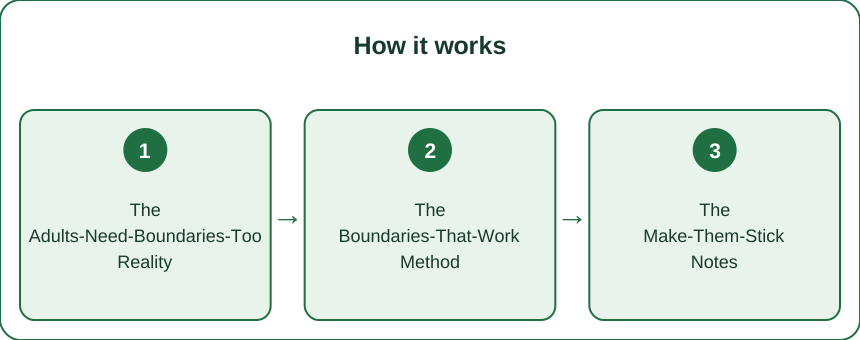
The Make-Them-Stick Notes
Making screen boundaries stick: the the-remove-friction-reducers (the making mindless-scrolling harder from the digital-declutter chapter — the the-friction; the add-friction), the the-phone-out-of-reach (the keeping the phone out-of-reach at key-times from the digital-declutter chapter — the the-out-of-reach; the distance-it), the the-replace-the-habit (the replacing scrolling with a-better-habit from the digital-declutter chapter — the the-replacement; the swap-the-habit), the the-consistency (the consistent boundaries from the digital-declutter chapter — the the-consistency; the hold-them), the the-eye-care (the eye-breaks and screen-eye care from the eye-strain-screen chapter — the the-eyes; the care-for-eyes), the the-sleep-protection (the protecting sleep from screens from the night-mode-sleep-truth chapter — the the-sleep; the protect-sleep), the the-model-for-kids (the modeling boundaries for kids from the kids-screen-eye-habits chapter — the the-model; the lead-by-example), and the frame (adult-screen-boundaries as phone-free-times-app-limits-and-eye-breaks, made-sticky-with-friction-and-replacement — boundaries that actually stick. Set adult screen boundaries that stick — phone-free times (meals, mornings, before-bed), no screens before bed, app limits, the 20-20-20 rule, and fewer notifications — made sticky by adding friction to mindless scrolling, keeping the phone out of reach, and replacing the habit: screen-time boundaries that actually stick, for grown-ups too.
We worry about kids’ screen time while scrolling for hours ourselves — and adult screen boundaries are just as important, and just as hard to hold. The boundaries that work: phone-free times (meals, mornings, before-bed), no screens before bed (for sleep), app limits, the 20-20-20 rule (for eyes), fewer notifications, phone-free spaces, and scheduled intentional use. Make them stick — add friction to mindless scrolling, keep the phone out of reach at key times, replace the habit with a better one, stay consistent, and model it for kids. Screen-time boundaries that actually stick, for grown-ups too.
Keep Reading
This article is for general informational purposes only and is not medical advice. Always consult a qualified health professional for guidance specific to you.