Why Standing Up From Your Screen Doesn't Actually Fix Eye Strain
Quick Answer: Standing breaks address posture and circulation, not the specific cause of eye strain — reduced blink rate and sustained close-focus. Eye strain needs its own dedicated break: looking at something 20+ feet away for 20 seconds, with deliberate full blinks.
You’ve been diligent about standing desk breaks every hour. Back feels better, energy’s more stable — and your eyes are exactly as gritty and tired as before you started. That’s not a failure of the habit. It’s a mismatch between what standing breaks actually treat and what’s causing your eye strain in the first place.

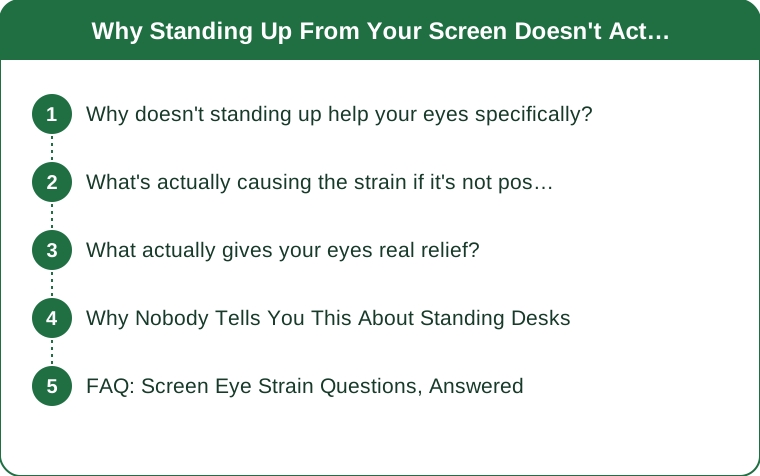
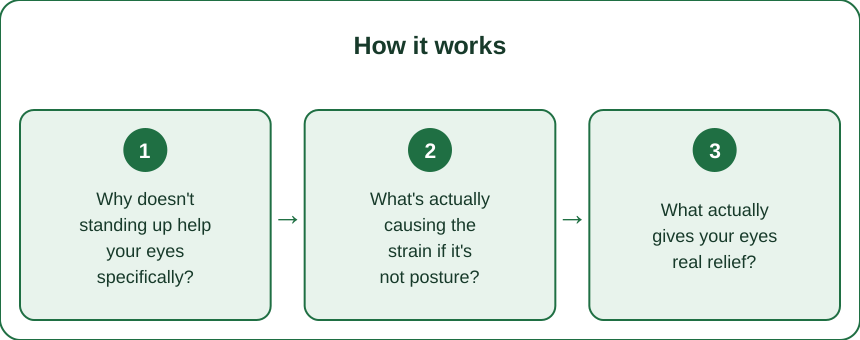
Why doesn’t standing up help your eyes specifically?
Because eye strain from screens comes from two things standing doesn’t touch: reduced blink rate (screen focus drops blinking by roughly half its normal rate) and sustained near-focus, which fatigues the eye’s focusing muscles regardless of whether you’re sitting or standing.
A standing break moves your spine and improves circulation — genuinely valuable, just not for this particular problem. You can stand at your desk staring at the same screen at the same close distance, and your eyes get zero relief.
What’s actually causing the strain if it’s not posture?
Two mechanisms, both blink-and-focus related:
Reduced blinking dries out the eye’s tear film, causing the classic ‘gritty, tired’ sensation — this happens because concentrated screen focus measurably suppresses your natural blink reflex.
Sustained close-focus keeps the eye’s internal focusing muscle (the ciliary muscle) contracted for hours without the periodic relaxation it gets from naturally varying your focus distance throughout a non-screen day.

What actually gives your eyes real relief?
The 20-20-20 approach, done correctly: every 20 minutes, look at something at least 20 feet away for a full 20 seconds — and add deliberate full blinks during that window, since the distance change alone doesn’t fully address the dried-out tear film issue.
A quick glance out a window for 3 seconds doesn’t count — the eye’s focusing muscle needs the full 20 seconds to actually relax and reset.
Why Nobody Tells You This About Standing Desks
Standing desks are genuinely valuable for posture, back health, and circulation — none of that is in question. But they’re often marketed as a general ‘screen health’ fix, which blurs the line between what they treat and what they don’t.
Eye strain and physical posture strain are two separate problems with two separate fixes. Treating one doesn’t reduce the other, which is exactly why standing desk users are often surprised their eye fatigue didn’t improve.
FAQ: Screen Eye Strain Questions, Answered
Do blue light glasses help more than standing breaks?
Evidence on blue light glasses for eye strain specifically is mixed — the blink-and-focus mechanism above is the better-established cause, and a break habit addresses it more directly than glasses alone.
How many deliberate blinks should I do during a break?
Around 10-15 slow, full blinks during your 20-second distance break helps redistribute tear film more effectively than a few quick blinks.
Can screen eye strain cause headaches?
Yes — the sustained focusing effort can trigger tension-type headaches, especially combined with dry eyes; if headaches are frequent or severe, it’s worth mentioning to an eye doctor rather than assuming breaks alone will resolve it.
TL;DR:
- Standing breaks help posture and circulation, not the blink-rate and focus mechanisms behind eye strain
- Reduced blinking dries out tear film; sustained close-focus fatigues eye muscles — both need direct addressing
- Do a real 20-20-20 break: 20 feet away, 20 full seconds, with deliberate full blinks included
- Eye strain and posture strain are separate problems needing separate fixes
Keep the standing breaks for your back — just don’t expect them to also solve a problem they were never designed to touch.
Keep Reading
This article is for general informational purposes only and is not medical advice. Always consult a qualified health professional for guidance specific to you.