Why Reduced Blinking During Screen Focus Causes More Eye Strain Than Blue Light Does
Blue light gets blamed for the burning, gritty feeling that shows up after a long stretch at a screen, and blue-light glasses get bought as the fix, but the more consistent driver of that discomfort is something simpler and mostly unrelated to light wavelength at all: a measurable drop in how often people blink while visually concentrating.

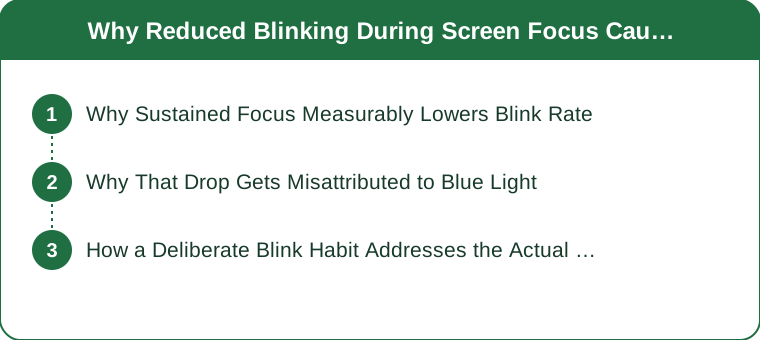
Why Sustained Focus Measurably Lowers Blink Rate
The drop: sustained-visual-concentration-on-a-screen-lowers-blink-rate-by-roughly-half-compared-to-relaxed-conversation-regardless-of-the-devices-actual-light-output (sustained visual concentration on a screen lowering a person’s blink rate by roughly half compared to relaxed conversation or casual reading, regardless of that specific device’s actual blue light output or brightness setting, per the eye-strain-screen-guide logic — sustained-visual-concentration-on-a-screen-lowering-a-persons-blink-rate-by-roughly-half-compared-to-relaxed-conversation-or-casual-reading-regardless-of-that-specific-devices-actual-blue-light-output-or-brightness-setting), and the reframe (concentration itself, not the light source, driving the physiological change)).

Why That Drop Gets Misattributed to Blue Light
The misattribution: the-burning-gritty-sensation-caused-by-a-drying-tear-film-from-reduced-blinking-gets-blamed-on-blue-light-because-blue-light-is-the-more-visible-marketed-explanation (the burning, gritty sensation actually caused by a drying tear film from reduced blinking getting blamed on blue light instead, largely because blue light is the more visible and heavily marketed explanation available, per the blue-light-glasses-truth-guide logic — the-burning-gritty-sensation-actually-caused-by-a-drying-tear-film-from-reduced-blinking-getting-blamed-on-blue-light-instead-largely-because-blue-light-is-the-more-visible-and-heavily-marketed-explanation-available), and the frame (a marketed cause displacing the less visible physiological one)).
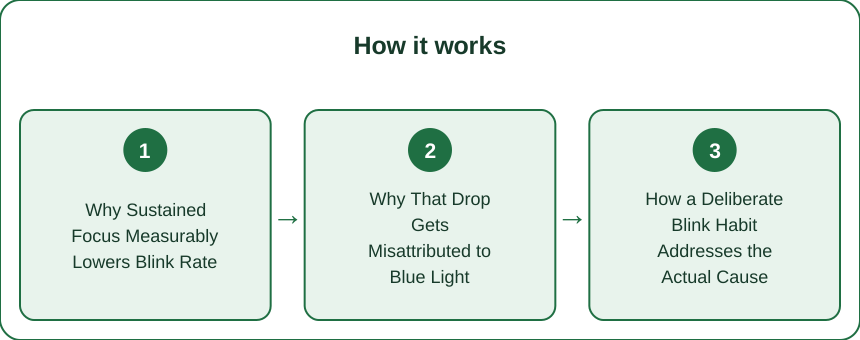
How a Deliberate Blink Habit Addresses the Actual Cause
The fix: consciously-blink-fully-and-deliberately-every-few-minutes-during-screen-focused-work-to-restore-the-tear-film-rather-than-relying-on-blue-light-filtering-alone (consciously blinking fully and deliberately every few minutes during screen-focused work, specifically to restore the tear film’s normal moisture level, rather than relying on blue-light filtering glasses alone to solve a problem they don’t actually address, per the how-to-take-effective-screen-breaks-guide logic — consciously-blinking-fully-and-deliberately-every-few-minutes-during-screen-focused-work-specifically-to-restore-the-tear-films-normal-moisture-level-rather-than-relying-on-blue-light-filtering-glasses-alone-to-solve-a-problem-they-dont-actually-address), and the frame (treating the mechanical cause directly instead of filtering for the wrong variable)).
Sustained visual concentration on a screen lowers blink rate by roughly half compared to relaxed conversation, regardless of that device’s actual blue light output, and the resulting dry, gritty sensation from that drop gets blamed on blue light mostly because it’s the more visible, heavily marketed explanation. Consciously blinking fully every few minutes during screen-focused work restores the tear film directly, addressing the mechanical cause instead of filtering for a variable that was never really the problem.
Keep Reading
This article is for general informational purposes only and is not medical advice. Always consult a qualified health professional for guidance specific to you.