Why Taking a Screen Break Doesn't Help If You Just Switch to Your Phone
Quick Answer: A screen break only helps eye strain and mental fatigue if it actually involves looking at something other than a screen — swapping a laptop for a phone keeps the eyes at the same close focal distance and keeps the brain in the same reactive, notification-driven mode, meaning the break provides the appearance of rest without the actual physiological benefit.
The timer goes off, the laptop closes, and the phone comes out instead — and twenty minutes later, the eyes feel just as strained as before the ‘break’ started, because from the eyes’ perspective, nothing actually changed.

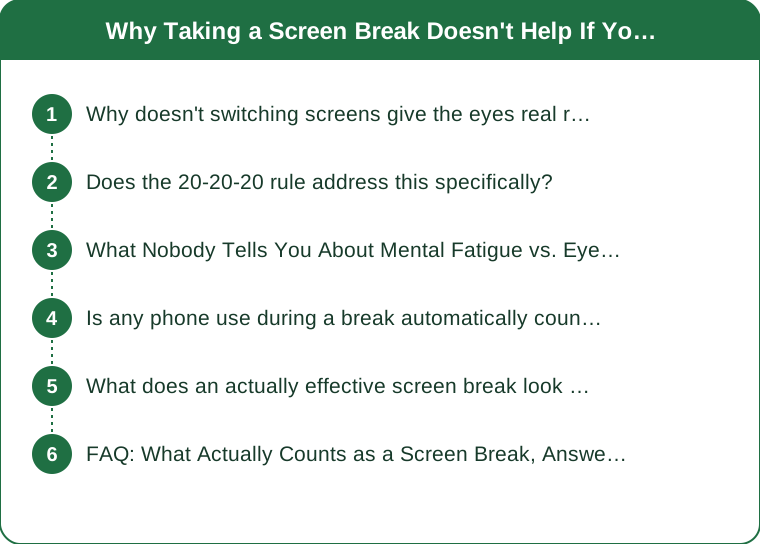
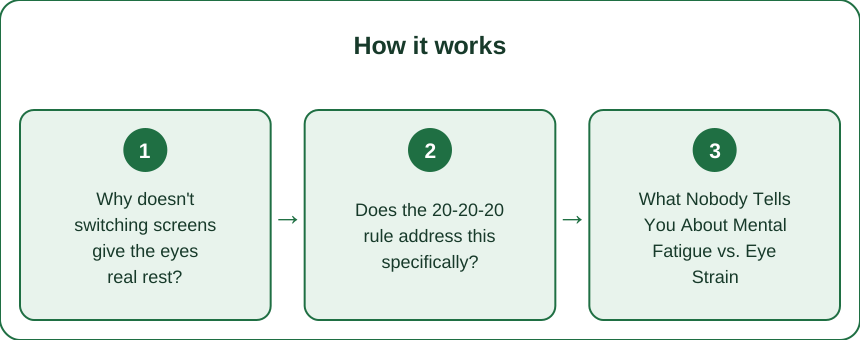
Why doesn’t switching screens give the eyes real rest?
Eye strain from screens comes largely from sustained close-focus work, which keeps the eye’s focusing muscles contracted for extended periods without the natural variation in focal distance that looking around a room or outside provides; a phone held at a similar close distance to a laptop screen keeps those same muscles in the same sustained position, meaning the underlying cause of the strain never actually gets a break, regardless of which device is being looked at.
Does the 20-20-20 rule address this specifically?
Yes — the 20-20-20 rule (every 20 minutes, look at something 20 feet away for 20 seconds) is built specifically around changing focal distance, not just stepping away from one device, and its benefit comes entirely from that distance shift; picking up a phone instead defeats the actual mechanism the rule relies on, even if it technically counts as ‘putting the laptop down.‘
What Nobody Tells You About Mental Fatigue vs. Eye Strain
Screen breaks are often framed as being about eye strain alone, but nobody tells you that a real break also needs to address mental and attentional fatigue separately, and scrolling a phone — with its rapid content switching and notification-driven attention hooks — often keeps the brain in the same reactive, high-stimulation mode as focused screen work, meaning even if eye strain were somehow addressed, the mental fatigue a real break is also meant to relieve doesn’t get resolved either.

Is any phone use during a break automatically counterproductive?
Brief, deliberate phone use — like checking one specific thing and putting it back down — is less problematic than open-ended scrolling, since the issue is less about touching a phone at all and more about sustained close-focus viewing and the reactive attention pattern scrolling specifically triggers; a quick glance is meaningfully different from a ten-minute scroll session.
What does an actually effective screen break look like?
Looking at something at a genuinely different distance (out a window, across a room), moving the body (a short walk, stretching), and avoiding picking up a second screen device covers the core elements that make a break physiologically effective — the common thread across all of them is a real change in what the eyes and brain are doing, not just closing one device.
FAQ: What Actually Counts as a Screen Break, Answered
Does listening to a podcast or audio content count as a real screen break?
Yes, if it doesn’t involve looking at a screen — audio content addresses neither eye strain nor screen-related mental fatigue directly, but it avoids the specific problem of continued close-focus viewing, making it a reasonable break activity.
Is stepping outside better than staying indoors during a break?
Stepping outside adds the benefit of natural light and typically longer, more varied focal distances than most indoor spaces offer, which tends to make outdoor breaks somewhat more effective for eye strain relief than staying in a small indoor room.
How long does a break need to be to make a real difference?
Even a genuine 20-second distance-focus shift provides some benefit per the 20-20-20 rule, but breaks in the two-to-five-minute range that include movement and a real focal distance change tend to provide more noticeable relief for both eye strain and mental fatigue.
TL;DR:
- Eye strain comes from sustained close focus, and a phone held at a similar distance doesn’t relieve that
- The 20-20-20 rule works specifically because of the distance change, which phone use skips entirely
- Scrolling keeps the brain in the same reactive mode as focused screen work, missing the mental-fatigue benefit too
- A real break needs a genuine change in focal distance and attention, not just a different device in hand
A break that swaps one screen for another isn’t really a break — it’s the same strain wearing a different outfit, and the eyes know the difference even when the calendar reminder doesn’t.
Keep Reading
This article is for general informational purposes only and is not medical advice. Always consult a qualified health professional for guidance specific to you.