Why the 20-20-20 Rule Helps Your Eyes but Not Your Neck or Focus Fatigue
Quick Answer: The 20-20-20 rule (every 20 minutes, look at something 20 feet away for 20 seconds) specifically addresses eye focusing fatigue from sustained close-up screen focus, but it does nothing for neck and shoulder tension from static posture, mental fatigue from continuous cognitive load, or dry eyes from reduced blink rate — which is why people who follow it faithfully still end the day feeling generally drained even though their eyes technically got the recommended breaks.
The rule is genuinely useful for exactly what it targets — it’s just one piece of a larger screen fatigue picture, not a complete solution.

What the 20-20-20 Rule Actually Targets
Sustained close-focus work keeps the eye’s focusing muscle (the ciliary muscle) in a prolonged, unchanging contracted state, and periodically shifting focus to something distant relaxes that muscle, reducing the specific strain associated with focusing fatigue and some associated headaches. This mechanism is well-supported and the rule does genuinely help with this particular symptom — the issue is that eye focusing fatigue is only one contributor to overall ‘screen tired’ feeling.
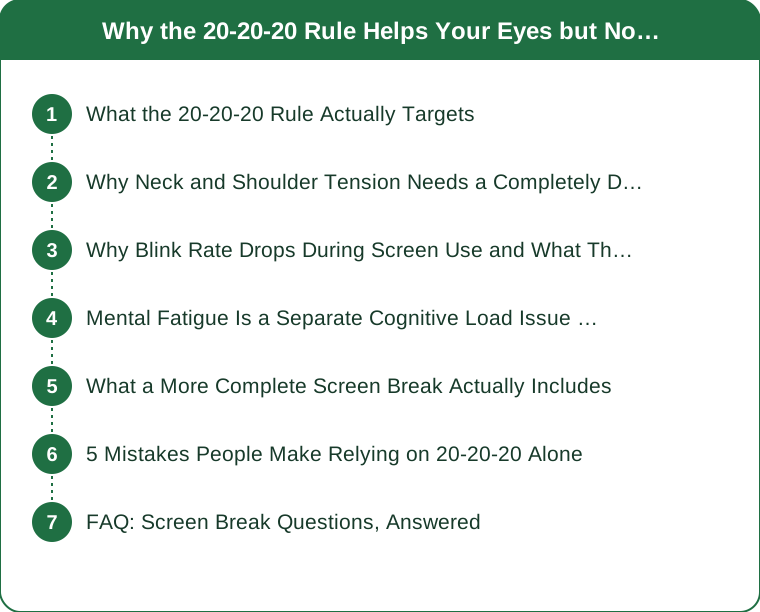
Why Neck and Shoulder Tension Needs a Completely Different Break
Static posture — head tilted slightly forward toward a screen for extended periods — creates sustained muscular load on the neck and upper back that looking at something 20 feet away, while still seated in the same position, does absolutely nothing to relieve. Standing up, changing position, or doing a brief shoulder roll and neck stretch addresses this separate physical strain source that eye-focused breaks simply don’t touch.
Why Blink Rate Drops During Screen Use and What That Does
People blink significantly less frequently while focused on screens — sometimes less than half the normal rate — which reduces the tear film’s ability to keep the eye surface lubricated and causes dry eye discomfort that’s mechanically different from focusing fatigue, even though both get lumped together as ‘eye strain.’ Consciously blinking fully several times during breaks, or using lubricating eye drops, addresses this specific cause more directly than distance-focused breaks alone.

Mental Fatigue Is a Separate Cognitive Load Issue Entirely
Continuous cognitive engagement — problem-solving, decision-making, sustained attention — depletes mental resources in a way that’s unrelated to any physical eye or posture mechanism, and a 20-second glance out a window doesn’t meaningfully restore cognitive resources the way even a brief genuine mental disengagement (a short walk, a few minutes away from screens and tasks entirely) does.
What a More Complete Screen Break Actually Includes
A genuinely restorative break combines distance eye focus, a posture change (standing, stretching), a few deliberate full blinks, and a short period of genuine task disengagement — this doesn’t need to happen every single 20-minute cycle, but building at least one more complete break into every hour or two addresses the fuller picture that the 20-20-20 rule alone doesn’t cover.
5 Mistakes People Make Relying on 20-20-20 Alone
1. Assuming eye breaks alone will fix general end-of-day fatigue that’s actually coming from posture or mental load. 2. Staying seated in the same position during the 20-second break instead of also standing or moving. 3. Not blinking deliberately during the break, missing the dry-eye component entirely. 4. Skipping longer, less frequent breaks in favor of only the frequent short ones. 5. Not adjusting workstation ergonomics, which reduces how much strain builds up between breaks in the first place.
FAQ: Screen Break Questions, Answered
Is the 20-20-20 rule still worth doing if it doesn’t fix everything?
Yes — it specifically and effectively addresses eye focusing fatigue, which is a real and common contributor to screen discomfort; it’s just not a complete fatigue solution on its own.
How often should a longer, fuller break happen during a workday?
A short 5-10 minute break involving standing, moving, and genuine task disengagement roughly once every 60-90 minutes is a reasonable target for most desk-based screen work.
Do blue light glasses address any of these other fatigue causes?
Blue light glasses primarily target a different, more debated concern (blue light exposure and sleep), and current evidence doesn’t strongly support them addressing posture, mental fatigue, or dry eye specifically.
TL;DR:
- 20-20-20 specifically relieves eye focusing fatigue from sustained close-up screen work
- It does nothing for neck/shoulder tension from static posture, which needs a physical position change
- Reduced blink rate causes a separate dry-eye discomfort that needs deliberate full blinking to address
- Mental fatigue from cognitive load needs genuine task disengagement, not just an eye-focus break
If you’re still exhausted despite following the rule faithfully, the fix usually isn’t doing 20-20-20 more often — it’s adding the posture, blink, and mental-break pieces the rule was never designed to cover.
Keep Reading
This article is for general informational purposes only and is not medical advice. Always consult a qualified health professional for guidance specific to you.