Why Your Eye Strain Gets Worse as the Days Get Shorter
Quick Answer: Screen discomfort depends heavily on the contrast between your screen and the room around it. As daylight disappears earlier, your room gets darker while your screen stays the same brightness, so the contrast ratio climbs through the afternoon. Your pupils are then constantly adjusting between a bright screen and a dark surround, which is the main mechanism behind autumn eye fatigue.
You worked the same hours in June and felt fine. Now it is late August, the light is going noticeably earlier, and by 5pm your eyes ache in a way they did not two months ago. Your screen time has not changed.
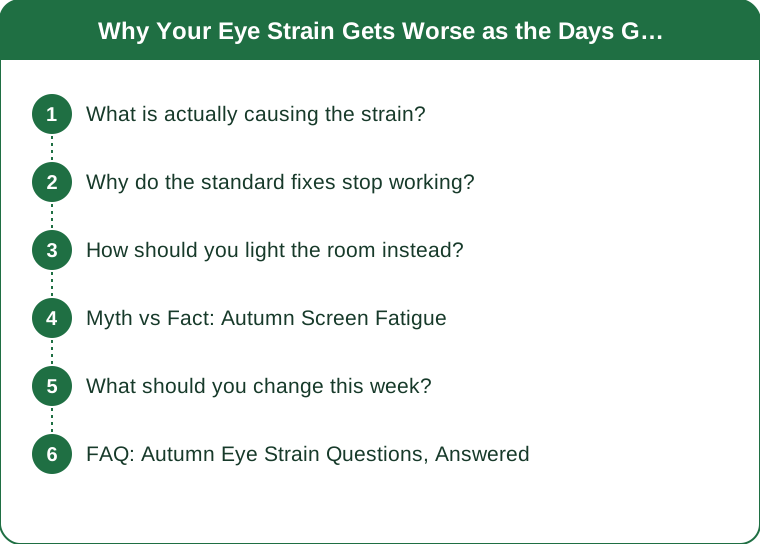
What is actually causing the strain?
Contrast, more than brightness, and it is a moving target through the afternoon.
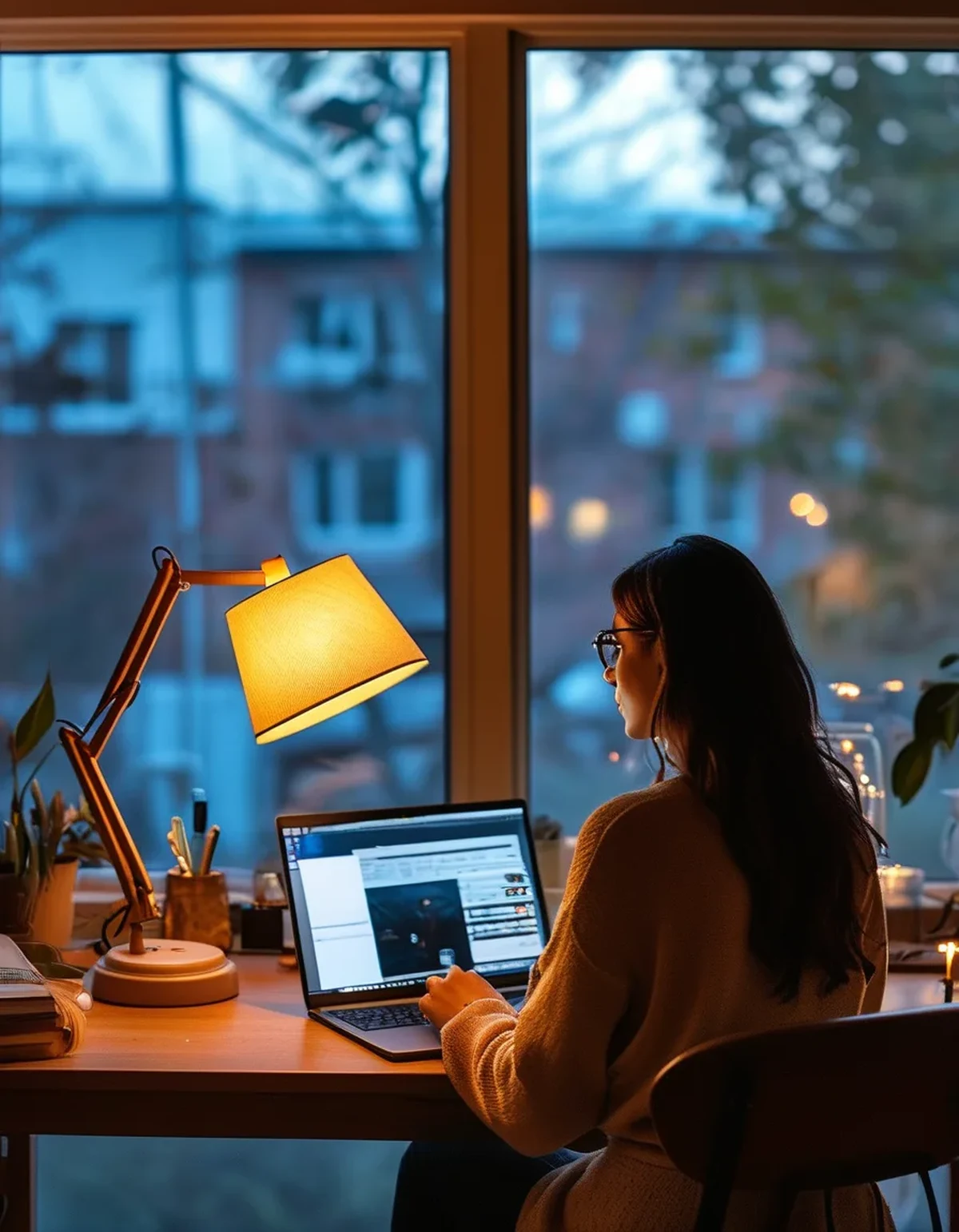
Your eyes are comfortable when the things you look at are roughly similar in brightness. A bright screen in a well-lit room is fine. The same bright screen in a dim room is not, because every time your gaze moves from screen to desk to wall, your pupils have to constrict and dilate.
That adjustment is done by muscles, and doing it thousands of times an hour is a real workload. The result is aching, a heavy feeling around the eyes, and often a headache across the brow.
In summer, ambient light stays high until late evening, so the contrast ratio stays reasonable. In autumn, the room darkens progressively from mid-afternoon while your screen brightness stays fixed, and the ratio climbs steadily through exactly the hours you are still working.
The second mechanism is blink rate. People blink substantially less when concentrating on a screen, which is a year-round problem — but heating turns on in autumn, indoor air gets drier, and reduced blinking in dry air produces considerably more discomfort than the same blink rate in humid summer air.
Why do the standard fixes stop working?
Because most of them address the screen, and the screen is not the thing that changed.
The 20-20-20 rule — looking 20 feet away for 20 seconds every 20 minutes — helps with focusing muscle fatigue. It does not address pupil adjustment from contrast, and in a dark room the distant object you are looking at is also dark, which means the break involves another large brightness change.
Blue light filters address a different concern entirely and the evidence for them reducing eye strain specifically is weak. If they help you, they help, but they are not treating the contrast mechanism.
Reducing screen brightness is often counterproductive as a standalone fix. A dim screen in a dim room reduces contrast, which helps, but it also makes text harder to resolve, which increases the focusing effort. The better move is usually to raise the room rather than lower the screen.
What does address it: matching the room to the screen, keeping a bright surface behind the monitor rather than in front of it, and taking breaks that involve looking at something at a similar brightness.
How should you light the room instead?
Three specific placements, in order of how much difference they make.
1. Bias lighting behind the screen. A lamp or light strip that illuminates the wall behind your monitor is the highest-return change available. It raises the brightness immediately surrounding the screen, which is where the contrast problem is worst. This single change resolves a large part of afternoon eye strain for most people and costs very little.
2. Ambient room light, not directed at you. A lamp bounced off a ceiling or wall raises overall room brightness without creating glare on the screen. Overhead lighting directly above a screen often creates reflections, which is its own problem.
3. A task light for anything on paper, positioned so it lights the desk without hitting the screen. If you look between paper and screen frequently, matching their brightness matters as much as matching screen and wall.
What to avoid: a single bright lamp in your field of view beside the screen, which creates a new high-contrast edge rather than fixing the existing one. And a window directly behind the monitor, which in autumn goes from a bright backdrop at 2pm to a black rectangle at 5pm — the worst possible surround because it changes.
Set your screen brightness to match the wall behind it, and re-check it in the late afternoon rather than setting it once in the morning.
Myth vs Fact: Autumn Screen Fatigue
Myth: Your eyes get tired because you are looking at a screen too long. Fact: Duration matters, and the specific mechanisms are focusing effort, reduced blink rate, and pupil adjustment from contrast. Two people with identical screen time in different lighting have very different experiences, which tells you the room is doing a lot of the work.
Myth: Blue light is the main culprit. Fact: The evidence for blue light causing eye strain is weak, and blue-light-filtering lenses have not shown a consistent benefit for it. Blue light is more relevant to sleep timing than to daytime eye comfort, which is a genuine but separate issue.
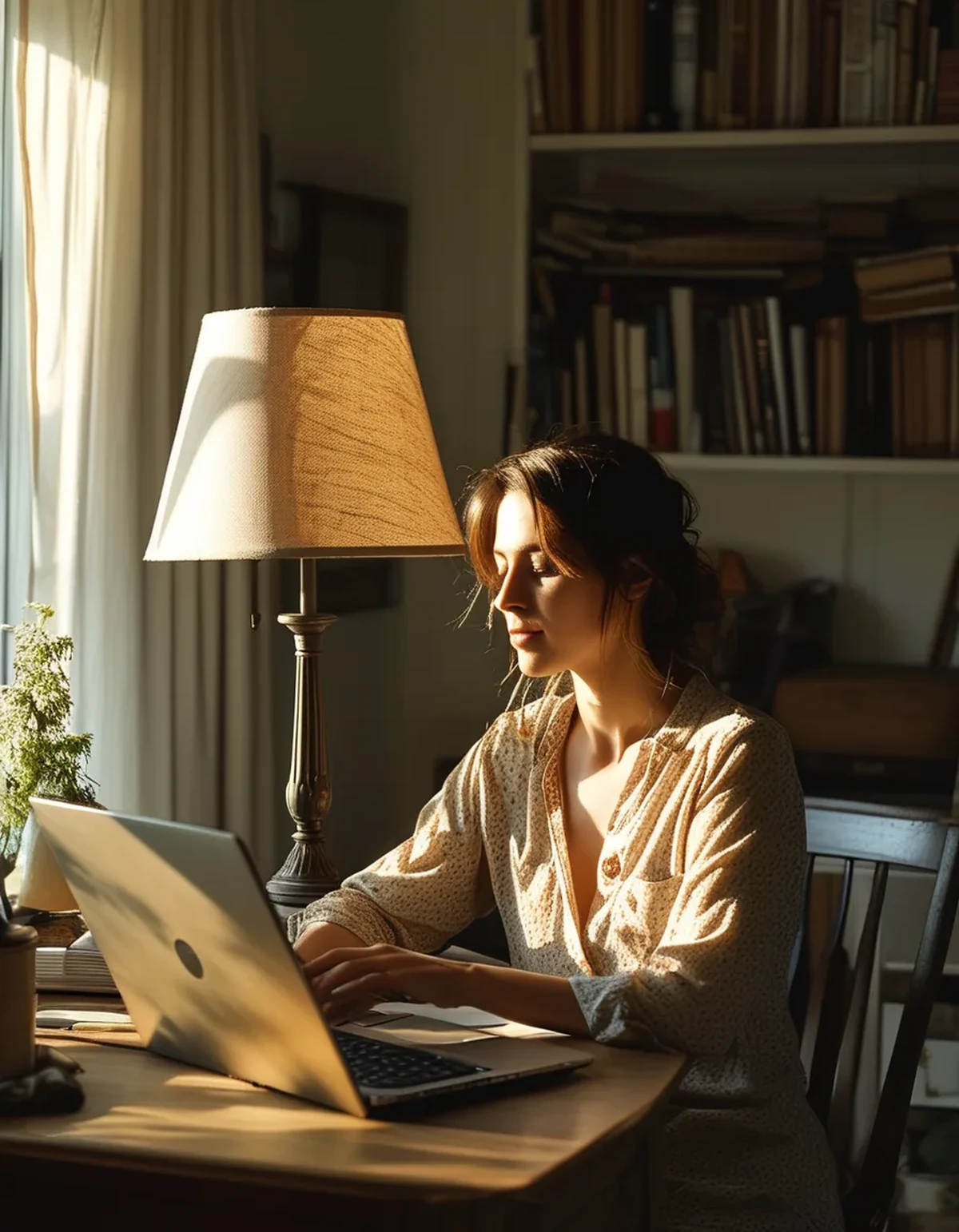
Myth: Working in the dark is easier on your eyes. Fact: It is the worst condition available, because it maximizes the contrast between screen and surround. The feeling that a dark room is restful comes from the absence of glare, which you can have with proper lighting too.
Myth: Dry eyes in autumn means you need drops. Fact: Drops help symptomatically. The underlying cause is usually reduced blinking combined with heated indoor air, and addressing both — deliberate blinking and some humidity — treats the cause rather than the symptom. This is general information, not medical advice; persistent dryness or vision changes should be checked by an optometrist.
Myth: Nothing can be done about the light going earlier. Fact: The daylight is not the variable you control; the room lighting is. A well-lit room at 5pm in November can be a more comfortable working environment than a poorly lit one at 3pm in June.
What should you change this week?
A short list, roughly in order of effect per minute spent.
- Put a lamp behind your monitor, aimed at the wall. This is the highest-return change and takes two minutes
- Re-check screen brightness at 4pm, not just in the morning. If the room dims and the screen does not, adjust it. Some systems do this automatically and most people have it turned off
- Move your desk out of the window-behind-screen position if you are in it. A window to the side is far better than a window behind or directly in front
- Set a break that involves standing and looking at something lit. Looking out a window in the afternoon works well; looking at a dark corner does not
- Blink deliberately. Twenty conscious full blinks whenever you notice dryness. It sounds trivial and it addresses the actual mechanism
- Consider humidity once heating starts. Dry indoor air makes every other eye issue worse
And the point that matters most for the next three months: this problem gets progressively worse until the solstice. Sorting out the lighting now, while the change is still mild, means you are set up before the genuinely dark part of the year arrives rather than adapting to it in December when the strain is already established.
FAQ: Autumn Eye Strain Questions, Answered
Does dark mode help?
For some people in dim conditions, yes, because it reduces the screen-to-room contrast directly. For reading dense text it can reduce legibility for others, particularly people with astigmatism. It is worth trying, and the better general fix is matching the room to the screen rather than choosing a mode.
How bright should the room actually be?
A reasonable target is a room bright enough that a white page on your desk looks similar in brightness to a white background on your screen. If the page looks noticeably dimmer, the room needs more light. That comparison is easier and more useful than any number.
Why does it feel worse at home than at the office?
Offices are usually lit to a consistent standard all day regardless of the sun. Home lighting is typically designed for evening ambience rather than for working, and most home offices are substantially under-lit for screen work in the afternoon. It is one of the more common and least noticed differences between the two environments.
TL;DR:
- Autumn eye strain is mostly a contrast problem — the room darkens while the screen stays bright
- The standard fixes target the screen, but the room is the variable that changed
- Bias lighting behind the monitor is the single highest-return change, followed by bounced ambient light
- Re-check screen brightness in the late afternoon, avoid a window directly behind the screen, and blink deliberately
The eye strain that arrives with the shorter days is not about screen time. It is about everything around the screen getting darker while the screen does not, and it is fixed with a lamp rather than with discipline.
Keep Reading
This article is for general informational purposes only and is not medical advice. Always consult a qualified health professional for guidance specific to you.