Why Your Eyes Still Hurt After Taking Regular Screen Breaks
Quick Answer: Screen breaks alone don’t fix eye strain if you’re not actually blinking fully during screen time — reduced blink rate, not just screen distance, causes most digital eye strain. Add deliberate full blinks to your break routine, not just looking away.
You take your 20-second break every 20 minutes like clockwork. Your eyes still burn by 4pm. The break habit is good — it’s just treating half the problem while ignoring the bigger one happening the other 19 minutes and 40 seconds.

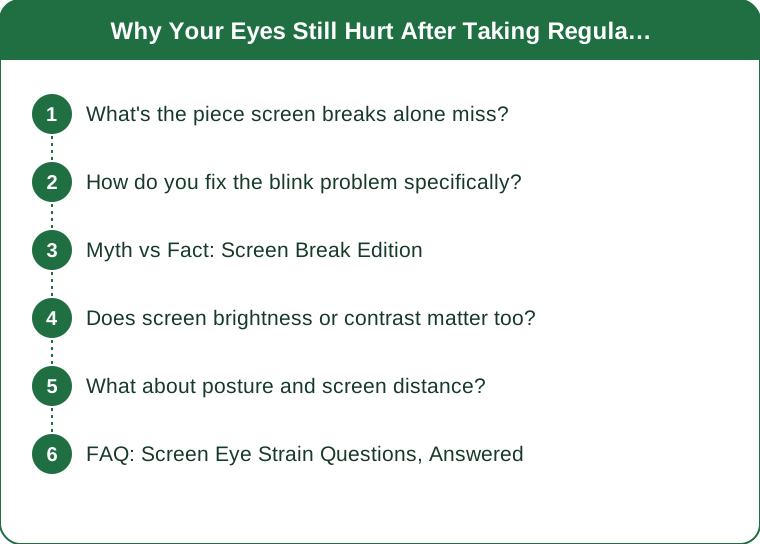
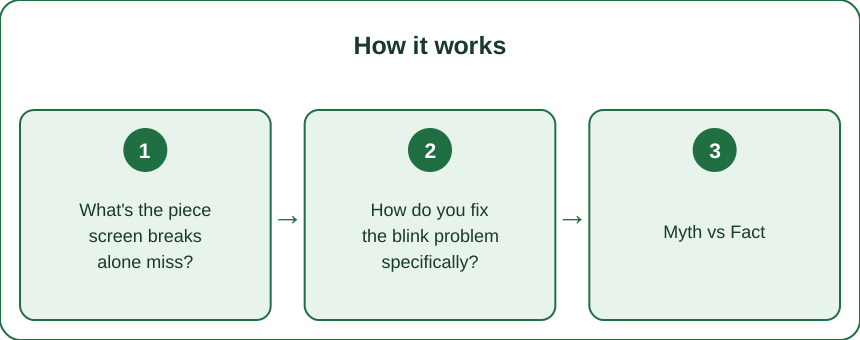
What’s the piece screen breaks alone miss?
Blink rate. People blink roughly 15-20 times per minute normally, but that drops to as low as 5-7 times per minute while focused on a screen. Fewer blinks means less tear film spread across your eyes, which causes the dryness and burning most people call ‘eye strain’ — and a 20-second glance away doesn’t fully fix a blink deficit that built up over 19 minutes.
How do you fix the blink problem specifically?
During your screen break, do 10 deliberate, full, slow blinks — not just resting your eyes open and staring elsewhere. This actively re-spreads tear film and gives more relief than the distance change alone. Some people set a secondary, quieter reminder just for this.
Myth vs Fact: Screen Break Edition
Myth: Looking away for 20 seconds is the whole fix. Fact: Distance change helps focusing muscles relax, but does nothing for blink-rate-related dryness — you need both.
Myth: Blue light is the main cause of screen eye strain. Fact: Reduced blinking and sustained close-focus are bigger contributors for most people than blue light exposure itself.
Myth: Eye drops fix the root cause. Fact: Drops treat the symptom (dryness) but don’t retrain your blink rate — useful as a supplement, not a replacement for behavior change.

Does screen brightness or contrast matter too?
Yes, independently of blink rate. A screen much brighter or dimmer than your surrounding room forces your pupils to work harder adjusting, adding fatigue on top of dryness. Match screen brightness to room lighting rather than maxing it out or dimming it to save battery.
What about posture and screen distance?
Screens positioned too close force more accommodation effort from your eye muscles. Arm’s length (roughly 20-28 inches) with the top of the screen at or slightly below eye level reduces both eye strain and the neck strain that often gets misread as eye pain.
FAQ: Screen Eye Strain Questions, Answered
How many deliberate blinks should I do per break?
About 10 full, slow blinks is enough to meaningfully re-spread tear film without disrupting your workflow.
Should I use blue light glasses too?
They may help some people with sleep if used in the evening, but they don’t address the blink-rate or distance issues that cause most daytime eye strain.
Why do my eyes hurt more on video calls specifically?
Video calls often mean sustained direct eye focus without the usual small glances around a document or page, which can lower your blink rate even further than regular screen work.
TL;DR:
- Screen breaks alone miss blink rate, which drops sharply during focused screen work
- Add 10 deliberate full blinks during each break, not just looking away
- Match screen brightness to room lighting and keep the screen at arm’s length
- Video calls often worsen blink rate more than regular screen work does
The 20-20-20 rule is only half the fix — the blinking is the other half.
Keep Reading
This article is for general informational purposes only and is not medical advice. Always consult a qualified health professional for guidance specific to you.