The 20-20-20 Rule: The Two-Second Habit That Saves Screen-Strained Eyes
The 20-20-20 rule is eye care’s simplest prescription — every 20 minutes, look 20 feet away for 20 seconds — and it fails for one reason only: nobody remembers to do it. The complete guide: the why, the automation and the upgraded break.

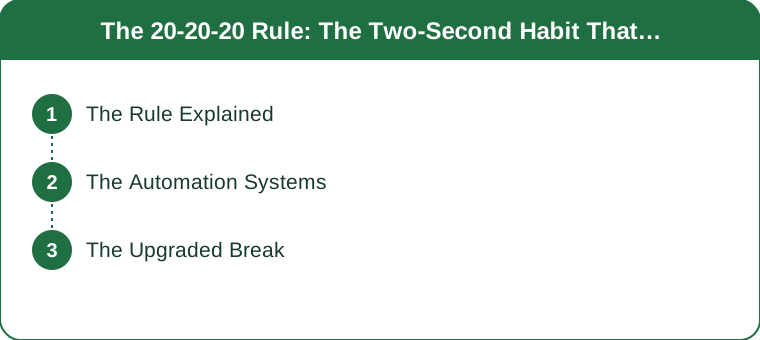
The Rule Explained
Why it works: the focusing-muscle mechanics (the near-focus being active muscular work — the ciliary muscles clenched for screen hours; the distance gaze as the release; the eye’s version of the stretch break per the eye-strain doctrine), the blink-rate collapse (the screen staring cutting blink rate by half or more — the dry-scratchy evening eyes being blink debt; the deliberate blinks as the top-up), the 20-foot logic (the distance where focusing muscles fully relax — the window view being ideal, the hallway acceptable; the six-meters-ish translation), the 20-second minimum (the muscles needing real seconds to release — the glance not counting; the slow-breath pairing that doubles the break’s value per the breath doctrine), the evidence honesty (the digital-eye-strain relief being well-supported — the myopia-progression research in kids adding urgency per the kids-screen doctrine; the rule relieving symptoms, not curing bad setups: the monitor-and-lighting basics from the ergonomic doctrine still mattering), and the cost-benefit absurdity (the two-second habit against the throbbing 6pm eyes — the best ROI in office wellness).

The Automation Systems
Making it happen without memory: the timer infrastructure (the 20-minute interval apps and watch reminders — the automation-over-willpower law from the habit doctrine; the break apps that dim the screen as the enforced version), the anchor method (the rule attached to existing events — the every-email-sent gaze, the end-of-meeting window look, the kettle-boil distance stare per the stacking doctrine), the environment design (the desk FACING or beside a window — the distance view available by head-turn; the wall-facing desk being the rule’s structural enemy per the environment doctrine; the distant-object designation for windowless rooms: the hallway-end poster), the meeting integration (the video-call gaze rest — the looking past the camera to the distance during listening turns; the eye break hidden in plain sight), the team-culture option (the shared break reminders in office settings — the normalized glance-away per the workplace doctrine), and the streak honesty (the rule done four times a day beating zero — the perfection ban; the habit graded weekly per the flexible doctrine).
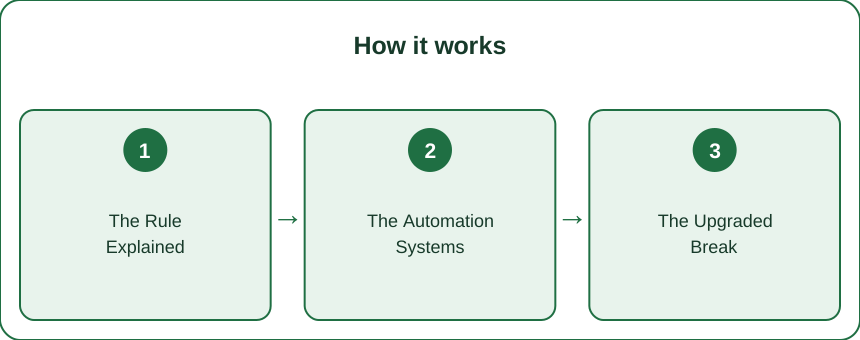
The Upgraded Break
Making 20 seconds work harder: the blink sequence (the five slow full blinks opening each break — the tear film respread; the dry-eye insurance from the eye doctrine), the distance-shift ladder (the near-middle-far focus walk — the window frame, the tree, the horizon; the focusing system exercised through its range), the posture piggyback (the eye break paired with the shoulder roll and chin tuck from the desk doctrine — the 20 seconds serving the whole desk-bound body per the movement-snack doctrine), the breath pairing (the one physiological sigh during the gaze from the breath doctrine — the nervous-system reset riding along), the stand-up escalation (the every-third-break stand from the sitting doctrine — the eye rule as the movement system’s metronome), the outdoor bonus (the real outdoor breaks when possible — the daylight dose from the circadian doctrine; the two-minute balcony gaze being the deluxe edition), and the closing pitch (the rule as the workday’s smallest keystone habit — the eyes, neck and nervous system all served by twenty scheduled seconds; the 6pm face that doesn’t ache; the window, looked through on purpose, all day). Every 20 minutes, 20 feet, 20 seconds — automated, anchored and upgraded: the eyes, saved by the smallest habit.
Every 20 minutes, look 20 feet away for 20 seconds — it releases clenched focusing muscles and repays blink debt, but only if automated: timer apps, email-sent anchors and a window-facing desk. Upgrade the break with five slow blinks, a sigh and a shoulder roll; four times a day beats zero.
Keep Reading
This article is for general informational purposes only and is not medical advice. Always consult a qualified health professional for guidance specific to you.